Alabama Legal Resources & Insights
Legal questions often arise during some of life's most important—and sometimes most difficult—moments. Understanding your options can make it easier to determine
what steps to take next.
The Doty Law Firm Legal Blog provides practical information about Alabama law for individuals and families facing questions involving estate planning, probate and estate administration, adoption, bankruptcy, guardianships, conservatorships, and related legal matters.
Our goal is to explain legal topics in straightforward language and answer the kinds of questions clients frequently ask when they are trying to understand their rights, responsibilities, and options under Alabama law.
Estate Planning
Estate planning involves much more than preparing a will. A comprehensive estate plan can address how your property will be managed and distributed, who can act on your behalf if you become incapacitated, how loved ones will be provided for, and how your wishes can be carried out in the future.
Our estate planning articles address topics involving wills, revocable and irrevocable trusts, powers of attorney, healthcare directives, asset protection planning, and other Alabama estate planning issues.
Whether you are creating your first estate plan or reviewing an existing plan after a change in your family or financial circumstances, our articles are designed to help you better understand the issues you may want to consider.
Probate & Estate Administration
The death of a loved one can leave family members with numerous legal and financial questions. Who has authority to handle the estate? What does an executor actually do? What information are heirs entitled to receive? How are debts paid? When can estate property be distributed?
Our Alabama probate and estate administration articles address questions involving executors and administrators, estate assets, creditor claims, estate accountings, distributions to heirs and beneficiaries, intestate estates, probate disputes, and the responsibilities involved in administering an estate.
We also discuss issues that can arise when beneficiaries, heirs, executors, or administrators disagree about the handling of an estate.
Guardianships & Conservatorships
Families sometimes face difficult decisions when a loved one can no longer independently manage personal, medical, or financial matters.
Our articles about Alabama guardianships and conservatorships explain the legal process, the differences between guardians and conservators, their respective responsibilities, and issues families may encounter when court involvement becomes necessary.
Adoption
Adoption creates a permanent legal relationship and involves specific requirements under Alabama law.
Our adoption resources discuss topics related to stepparent adoption, grandparent adoption, special-needs adoption, and other issues that may arise during the Alabama adoption process.
These articles are intended to help families better understand the legal steps involved as they prepare for an adoption.
Bankruptcy & Financial Relief
Individuals and families experiencing serious financial difficulties often have questions about their legal options and what bankruptcy would mean for their homes, vehicles, debts, and future finances.
Our bankruptcy articles provide general information concerning Chapter 7 bankruptcy, Chapter 13 bankruptcy, debt relief, and other issues that may affect Alabama consumers considering bankruptcy.
Answers to Common Alabama Legal Questions
Many of our articles begin with a question because that is often how a legal problem begins.
What happens if someone dies without a will in Alabama?
What is a personal representative or executor?
Can an heir request an accounting of an estate?
What is the difference between a revocable and irrevocable trust?
When is a guardianship or conservatorship necessary?
Rather than simply defining legal terminology, we strive to explain how Alabama law may apply in real-life situations and identify issues that may warrant additional legal advice.
Looking for Information About a Particular Alabama Legal Issue?
Browse our latest articles below or explore the blog by topic to find information relevant to your situation.
Because every legal matter is different, information provided on this website is intended for general educational purposes and should not be considered a substitute for legal advice concerning your individual circumstances.
Speak With Sara Doty
If you have questions about an Alabama legal matter involving estate planning, probate, or estate administration, guardianship, conservatorship, adoption, or bankruptcy, Doty Law Firm can help you understand your options and determine the appropriate next steps for your circumstances.
Posted by Sara Doty | Sep 23, 2026 |
Losing a loved one is heartbreaking enough—then comes the responsibility of settling their estate. If you've been named as the executor (called the personal representative in Alabama law) in a will, or appointed by the court if there's no will, you're stepping into a position of trust and legal d...
Posted by Sara Doty | Sep 23, 2026 |
When a loved one dies, questions about the estate's finances often arise quickly. Family members may want to know what property the deceased owned, whether assets have been sold, what debts have been paid, how much money remains in the estate, and when beneficiaries or heirs can expect to receive...
Posted by Sara Doty | Sep 08, 2026 |
When someone dies in Alabama with a modest amount of property in their name alone, families often assume they still have to open a full probate estate. That is not always true.
Alabama has a shortened court process called summary distribution under the Revised Alabama Small Estates Act, found at...
Posted by Sara Doty | Aug 25, 2026 |
This post explains Alabama’s intestate succession rules—what happens to a person’s assets and property when they die without a valid will. It presents and describes the official Alabama Intestate Succession Flowchart, walking through the priority order of inheritance: surviving spouse, children/descendants (“issue”), parents, grandparents and their descendants, and finally the State of Alabama if no qualifying relatives exist. The post emphasizes that intestacy rules remove personal control over distribution, can produce unexpected results (especially with blended families), and leave out non-relatives such as unmarried partners, stepchildren, friends, and charities. It concludes by encouraging readers to create a will so they, rather than the state’s default plan, control the outcome.
Posted by Sara Doty | Jun 24, 2026 |
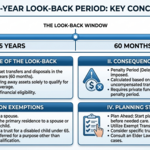
🔍 If you are planning for the future, you need to understand the five-year look-back period. This rule can heavily impact your estate, your assets, and your eligibility for long-term care.
⏱️ What Is the Look-Back Period?
When you apply for Medicaid to cover nursing home or long-ter...
Posted by Sara Doty | Feb 18, 2026 |
Losing a loved one is heartbreaking enough—then comes the responsibility of settling their estate. If you've been named as the executor (called the personal representative in Alabama law) in a will, or appointed by the court if there's no will, you're stepping into a position of trust and legal d...
Posted by Sara Doty | Dec 04, 2024 |
Family Preservation Matters.
One of the biggest concerns and one of the primary reasons for creating an estate plan is mitigating the risk of familial conflict should you become incapacitated or pass away. The harsh reality is that the tragic and unexpected can occur at any moment, and you must ...
Posted by Sara Doty | Jan 10, 2024 |
Summary. Death Without a Will.
Dealing with death without a Will requires you to follow specified state laws. When your parents pass away without a Will, it is both a challenging and time-consuming process. Consulting with an experienced estate planning attorney can help ensure you follow the applicable laws and make the process as smooth as possible for all involved parties.
Posted by Sara Doty | Sep 06, 2023 |
If you’re wondering how to make a living will or need a DNR form, contact my office at (256) 519-9970 to make an appointment and we can guide you through the process
Posted by Sara Doty | Feb 21, 2022 |
The term “life estate” often comes up in discussions of estate and Medicaid planning,but what exactly does it mean? A life estate is a form of joint ownership that allows oneperson to remain in a house until his or her death, at which time it passes to the otherowner, referred to as the person wi...
Posted by Sara Doty | Jul 22, 2019 |
If your loved one has died leaving property and there is no valid Will you may be worried about how assets will be distributed. Contrary to popular belief, dying without a Will does not mean that the State takes your property. Alabama has enacted statutes, called intestacy laws, that set forth t...
Posted by Sara Doty | May 15, 2019 |
Depending on your role in your loved one's estate plans (such as being named the Executor in the will); you may have significant duties and matters to handle upon their passing. First and foremost, you must allow yourself time to grieve and reflect upon that person's passing. Do not immediately t...
Posted by Sara Doty | Nov 25, 2018 |
As your parents age, it can become a struggle to respect their autonomy and independence while making sure you take all the right steps to keep them protected for the future. It's a phase in life that comes with some difficult decisions that you and your family will have to make together. One of ...
Posted by Sara Doty | Nov 15, 2018 |
Life insurance is driven by both contracts and Alabama Statutes. Failure to comply with certain contract provisions or Statutes could nullify any attempted changes to the policy or beneficiary. You may have a limited time to answer the lawsuit or your benefits may be denied forever. We would be more than happy to discuss your options with you. If you were denied benefits or sued in an Interpleader lawsuit, contact our office immediately. (256) 519-9970
Posted by Sara Doty | Feb 05, 2018 |
We Can Help Guide You Through the Step-Parent Adoption Process
Sometimes, helping build a new family involves more than providing life's necessities and a home for you and your step-children. We can guide step-parents through the process of adoption.
As a step-parent your rights to the children...
Posted by Sara Doty | Oct 23, 2017 |
While power of attorney and legal guardianship can perform similar functions in some cases, they are vastly different in terms of who is appointed, who does the appointing and how much control the appointed agent or guardian has.
What is a Power of Attorney?
A power of attorney is a legal d...
Posted by Sara Doty | Oct 11, 2017 |
Many parents with young children overlook the need for estate planning – some because they are healthy and are not ready to think about death; others because they are afraid of the costs; but most because they feel like their modest assets don't yet warrant investing in an estate plan.
For paren...
Posted by Sara Doty | Aug 14, 2017 |
Remarrying and starting a new family is an exciting time in most people's lives. Stepparents can and often do take on an important and involved role in children's lives. Sometimes the stepparent is more involved and a better influence than one of the biological parents. In these situations, many ...
Posted by Sara Doty | Jul 17, 2017 |
What is he difference between the two is vast, and not knowing the difference can cost you and your loved ones tens of thousands of dollars.
A Will, also know as a Last Will and Testament, is a legal document that gives directions on how and who to distribute your assets after you die. A Will al...