
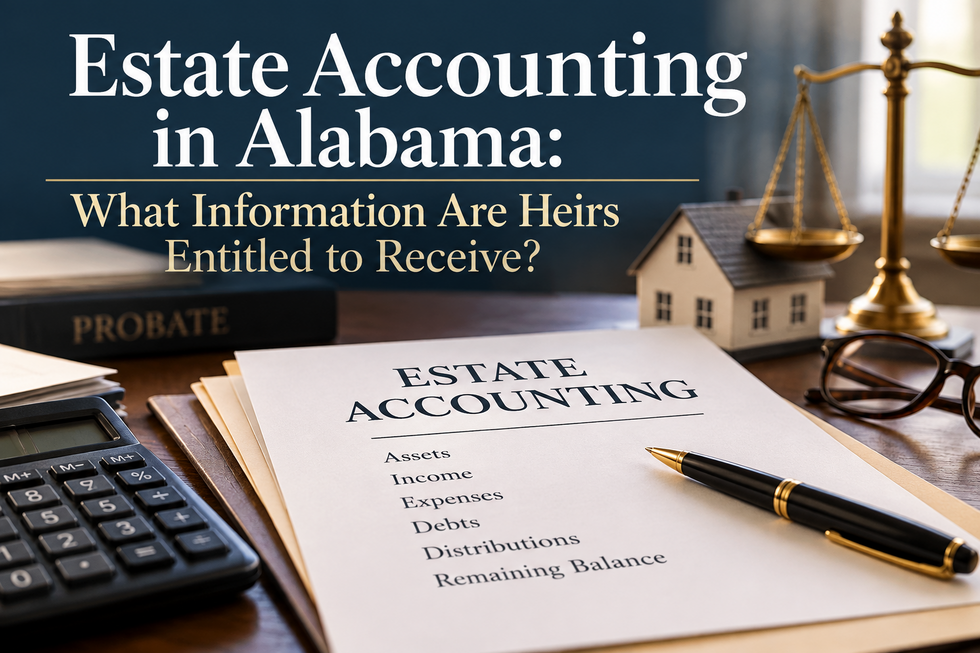
When a loved one dies, questions about the estate's finances often arise quickly. Family members may want to know what property the deceased owned, whether assets have been sold, what debts have been paid, how much money remains in the estate, and when beneficiaries or heirs can expect to receive their distributions.
In Alabama, the personal representative of an estate—either an executor named in a will or an administrator appointed by the probate court—has important responsibilities in collecting, managing, and ultimately distributing estate assets. Those responsibilities also involve maintaining appropriate records concerning the administration of the estate.
But what information are heirs and beneficiaries entitled to receive, and what can they do if they believe an executor or administrator is not providing sufficient information?
What Is an Estate Accounting?
An estate accounting is a financial record of the administration of a deceased person's estate.
In general, an accounting should allow interested parties and, when required, the court to understand what came into the estate, what went out of the estate, and what remains available for distribution.
Depending on the circumstances of the estate and the type of accounting involved, the records may address matters such as:
- assets received or collected by the personal representative;
- income earned by estate assets;
- proceeds from the sale of estate property;
- debts and claims paid by the estate;
- funeral, administrative, and other estate expenses;
- taxes paid from estate funds;
- attorney, personal representative, or other professional fees;
- distributions or advances made to beneficiaries or heirs; and
- property or funds remaining in the estate.
An accounting is more than simply stating the current balance of the estate's bank account. To be meaningful, the financial information should allow the transactions involved in administering the estate to be understood and, when appropriate, supported by records.
Are Heirs Entitled to an Accounting in Alabama?
The answer depends on the circumstances.
Alabama probate law imposes duties upon personal representatives concerning the administration and settlement of estates, but the precise information an heir or beneficiary is entitled to receive—and when a formal accounting may be required—can depend on factors such as the stage of administration, whether the estate is testate or intestate, the terms of the will, orders entered by the probate court, and whether a dispute has arisen.
There is also an important distinction between an heir and a beneficiary.
An heir is generally a person who would inherit under Alabama's intestacy laws when a person dies without an effective will governing the property. A beneficiary or devisee is a person or entity designated to receive property under a will.
In some estates, a person may be both.
For that reason, someone asking for estate financial information should first determine his or her legal interest in the estate.
What Should an Estate Accounting Show?
Although every estate is different, an understandable accounting will generally provide enough information to trace the significant financial activity of the estate.
Estate Assets
The accounting should identify estate assets received or controlled by the personal representative.
Depending upon the estate, these might include:
- checking and savings accounts;
- cash;
- real estate;
- vehicles;
- investment accounts;
- business interests;
- tangible personal property;
- refunds or payments received after death; and
- other property belonging to the probate estate.
It is important to distinguish probate assets from assets that pass outside probate. For example, some jointly owned property, accounts with valid beneficiary designations, and certain trust assets may pass outside the probate estate and therefore may not be administered by the personal representative as estate property.
Income Received by the Estate
An estate may continue to receive money after the decedent's death.
Examples can include rental income, interest, dividends, refunds, or proceeds generated by estate property. These receipts should be appropriately documented as part of the estate's financial records.
Property Sold by the Estate
If estate property has been sold, interested parties may have questions about what was sold, the amount received, and what happened to the proceeds.
Accurate records of significant estate transactions are particularly important when real estate, vehicles, valuable personal property, or other substantial assets are sold during administration.
Debts, Claims and Expenses
Administering an estate costs money, and valid debts and expenses may have to be paid before beneficiaries or heirs receive their final distributions.
Estate records may therefore reflect payments for matters such as creditor claims, funeral expenses, taxes, property expenses, court costs, professional services, and other legitimate costs of administration.
Attorney's Fees and Personal Representative Compensation
Attorney's fees and compensation paid in connection with administration can be significant estate expenses.
When these amounts are paid from estate assets, they affect the amount ultimately available for distribution. Questions concerning the reasonableness, authorization, or allocation of fees can become particularly important when an estate is disputed.
Distributions to Beneficiaries or Heirs
The accounting should appropriately reflect distributions made from the estate.
If some beneficiaries have received partial distributions while others have not, the estate's records should make it possible to determine what has been distributed and what remains to be distributed.
Does an Executor Have to Provide Bank Statements and Receipts?
This is a common source of disagreement in probate matters.
There can be a difference between the right to an accounting and an unrestricted right to demand every document generated during the administration of an estate.
Whether a particular heir or beneficiary is entitled to obtain bank statements, canceled checks, invoices, receipts, closing documents, or other underlying records may depend upon the person's legal interest, the type of proceeding, the issues in dispute, and orders of the probate court.
However, when substantial questions exist about estate transactions, supporting financial records can become important in determining whether estate funds have been properly collected, maintained, spent, and distributed.
What If the Executor or Administrator Will Not Provide Financial Information?
A lack of information does not necessarily mean that a personal representative has done something improper. Probate administration can take time, and some assets, claims, tax issues, or other matters may need to be resolved before a final settlement can occur.
Nevertheless, prolonged refusal to provide meaningful information can create legitimate concerns.
An interested person may begin by requesting specific information concerning the administration of the estate. A focused request is generally more useful than simply asking, "Where is the money?"
For example, the request might seek information concerning:
- the assets collected by the estate;
- property that has been sold;
- income received;
- debts and expenses paid;
- fees paid from estate funds;
- prior distributions; and
- the assets currently remaining for distribution.
When adequate information cannot be obtained informally, Alabama probate procedures may provide mechanisms for seeking an accounting, settlement, or other relief from the appropriate court, depending upon the circumstances.
What If the Numbers Do Not Add Up?
An accounting should do more than provide a collection of numbers. The beginning assets, subsequent receipts, expenses, distributions, gains or losses, and remaining estate property should be capable of reconciliation.
For example, if an estate received $300,000 in assets and another $20,000 from the sale of property, but only $150,000 remains for distribution, the records should account for what happened to the difference.
Discrepancies do not automatically establish wrongdoing. There may be legitimate debts, taxes, administrative expenses, losses, or other explanations. But significant unexplained discrepancies may warrant closer examination.
Can an Heir Challenge an Estate Accounting?
An interested party may have grounds to object to an accounting or settlement when there are legitimate questions concerning the administration of the estate.
Potential disputes can involve allegations concerning unreported assets, unexplained withdrawals, improper distributions, unauthorized transactions, excessive expenses, valuation issues, or other conduct affecting the estate.
The appropriate response depends heavily upon the facts. Probate disputes are particularly sensitive to deadlines and procedural requirements, so someone considering an objection should obtain legal advice concerning the particular estate rather than relying solely upon general information.
How Long Does an Executor Have to Settle an Estate in Alabama?
There is no single practical timetable that applies to every estate.
Some estates can be administered relatively efficiently, while others take substantially longer because of real estate, creditor claims, tax matters, disputed wills, difficult-to-value property, litigation, disagreements among beneficiaries, or other complications.
The fact that an estate remains open does not necessarily mean that the executor or administrator is mishandling it. The more useful questions are often what remains to be completed, why it remains outstanding, and whether the estate is progressing toward settlement.
Transparency Can Prevent Probate Disputes
Many probate disputes begin with poor communication.
Beneficiaries may become suspicious when they do not know what assets existed, what has been sold, what expenses have been paid, or why an estate remains open. At the same time, executors and administrators may become frustrated by repeated demands for information while they are attempting to complete the administration.
Clear records and appropriate communication can often prevent misunderstandings from escalating into litigation.
Questions About an Alabama Estate Accounting?
If you are an heir or beneficiary with questions about the administration of an Alabama estate, or if you are serving as an executor or administrator and need assistance fulfilling your responsibilities, we can help you understand the probate process and the legal options available under Alabama law.
Our firm assists clients with probate and estate administration, estate accountings, executor and administrator issues, beneficiary and heir disputes, and other contested and uncontested probate matters.
Contact us to discuss your Alabama probate or estate administration matter.


Comments
There are no comments for this post. Be the first and Add your Comment below.
Leave a Comment